Showing posts with label Reviews. Show all posts

Tuesday, January 31, 2012

Black Marble - Weight Against the Door EP

 If you haven't heard of New York City's Black Marble yet, give them a listen below. Their track "Pretender" is a real standout from their Weight Against the Door EP, which will be available on 12" vinyl February 14. You can already purchased a digital copy at iTunes.

"Pretender" shows a remarkably adept new waver synth style, with a driving beat and bass riff that is all function with no frills. If the track is showing off its in just how direct and focused it is, where nothing is extraneous and everything is substantial. The accompanying track, "On My Head", shows much of the same focus, while not quite matching the intensity of "Pretender". But a solid track all the same, with a lighter, more optimistic charm that explores slightly different territory, but keeps all the technical skill and restraint. This is a band worth paying attention to.


It would also be shallow of me to not thank Jessy for putting me onto these guys. Thanks again, Jessy.

Monday, August 8, 2011

The Face in the Lens: Anonymous Photographs - Robert Flynn Johnson

The Face in the Lens: Anonymous PhotographsThe Face in the Lens: Anonymous Photographs by Robert Flynn Johnson

My rating: 4 of 5 stars


Robert Flynn Johnson's collection of anonymous photographs makes the case that collecting anonymous photographs is as much an art (or at least a skill) as many of the photographs themselves. While many of these photos really do show artistic and technical skill, their potency is enhanced, or at least expanded, by their inclusion in this collection. Alone, many of these are fine photos, but together they create something even more fascinating - the collected comments and observations of photographers unknown, showing people now (mostly) passed away.

It is an odd feeling to be looking at a moment (staged or spontaneous) in a person's life, when you know that the subject of the photo as well as the photographer are now gone. It reminds me of Ossian Brown's brilliant collection Haunted Air, though in the case of The Face in the Lens the focus is much broader. But the feeling of looking into the past and seeing the photographic ghosts of anonymous people is somewhat eerie, but also intriguing. Photos say a lot, but they leave a lot up to the viewer, as Alexander McCall Smith's somewhat quirky introduction demonstrates. We're seeing history, but it's a history full of gaps, where we insert our own ideas and feelings from our perspective today. Johnson, through compiling these photos as he has, has created his own individual version of history, which is not bad, but is just the nature of telling history.

Part of the joy of this collection is in how varied the photos are and the noticeable lack of artistic aspiration in so many of them. Often the goal was simply to capture a significant moment for documentary, genealogical purposes rather than to do something artistic. What's cool is that sometimes both happened, which Johnson attributes to the nature of photography as an art reliant on technology - the camera can sometimes really help you out, even when you're totally ignorant of how to properly use it. Likewise, the subject of the photo can sometimes be as 'artful' in their body language and manner than any performer or model, suggesting that people really do have a natural impulse and feeling for what is aesthetically pleasing and/or what is genuine and real - this is true even in some of those stiff, posed photos where people were having to stand waiting forever while the picture was taken. Real life often presents the best performances you've ever seen.

Johnson has compiled a fine collection of anonymous photos and makes me wonder what he has in his collection that didn't make the cut for this book. What pictures does he have that still remain unknown to people and what pictures are floating around out there yet to be uncovered? I start feeling a tad weird thinking about my own photos being collected like this. What stories would people create about my photos? What would that say about the subject and what would it say about me? And what about you?

View all my reviews

Wednesday, July 13, 2011

Pornland: How Porn Has Hijacked our Sexuality - Gail Dines

Pornland: How Porn Has Hijacked our SexualityPornland: How Porn Has Hijacked our Sexuality by Gail Dines

My rating: 4 of 5 stars


Gail DinesPornland is the first book I’ve read about pornography and I think it was an excellent place to start. Using very clear language and thought-provoking analysis, Dines breaks down porn in ways that I found convincing and accurate. Admittedly, my personal layperson thoughts about porn and its effects on popular culture, business, sexuality, race and gender were often quite similar to Dines’, though obviously in a less-informed, critically organized and researched form. Pornland has confirmed and expanded my own thoughts and concerns about pornography, which I guess makes me a biased reader inclined to read her book with less critical rigor than I should. But I didn’t read this for a class or to become a pornography scholar; I read it as a thoughtful, concerned citizen who believes pornography might best represent everything wrong with modern society.

Dines’ historical account of when porn was first brought into the mainstream via Playboy, Penthouse, and Hustler illuminates how the porn industry operated then and now first and foremost as a business intent on making the highest profits possible. As a business, it represents everything wrong with capitalistic business practice, for it focuses solely on profit margins at the expense of people – profits supersede the interests (health, safety, well-being, etc.) of both the consumer (mostly men) and the employees (female performers). They are selling an industrially manufactured product from the assembly line, where churning out as many units as possible is the order of the day. This mass-production method debases people and sexuality, reducing them to mere objects and mechanics. No deeper social, emotional, psychological, or spiritual connection is desired.

According to Dines, the industry works really hard to sell its product and garner customers. How porn is advertised to the public is crafty indeed. Playboy capitalizes on their sleek, debonair approach, which has served Hugh Hefner quite well. The sleazy humor used by Hustler claims porn consumers are greasy white trash when in fact their main consumer isn’t that at all; nor is founder (and millionaire) Larry Flynt. When it does portray itself as a prosperous celebrity occupation, as with porn star Jenna Jameson, it conveniently omits any indication that being a porn star is actually a terribly miserable occupation. Porn survives, like so much of consumer business today, by advertising their product in an intentionally deceptive package – basically, they lie to us. Since people are always influenced by the culture in which they live, it is no wonder we begin listening to and believing porn’s messages, which come in all forms: Cosmopolitan and Maxim magazines, child clothing lines designed to make prepubescent girls “hot” and “sexy,” Carl’s Jr. ads containing messages so sexually explicit you wonder if food even entered the advertisers’ minds, or music videos of scantily-clad divas writhing around in some form of orgasmic ecstasy. These are a few examples of how porn has seeped into our culture. Sex sells, and porn has taken full advantage of this fact, with their primary objective being money and rabid consumerism.

21st century consumerism has reached terminal levels of gluttony, with porn being one of the grossest transgressors and supporters of rabid consumption. The point of the product is to get you to consume more and more, and with pornography addiction numbers piling up it seems that the industry has been wildly successful. What Dines successfully shows is how the harsh treatment of women, the open and unapologetic racism, pseudo-child porn’s manipulation of women to look younger, to name but three, all show that pornography, in a very real and rather literal way, consumes people. People are the product and while these raw materials are abundantly available, due to their savage exploitation their shelf life is very short.

Dines’ descriptions are vivid and explicit, pulling few punches as to the aggressive, racist, sexist, sadistic aspects of the industry. She also doesn’t avoid naming large corporations benefiting from porn – amazon.com & google.com are getting quite a bump from searches and sales; hotel chains like Marriott and Holiday Inn generate quite a sum from providing porno movies. And Dines points out the flaws in arguments that porn isn’t so bad because it can’t be proven that watching porn causes men to rape women – like rape is the only crime against women worth caring about. She is (rightfully) an unapologetic feminist who argues that feminism is about gender equality, which is completely absent in porno movies, and that so-called female sexual liberation celebrated by Cosmopolitan and Sex and the City is actually about pleasing and being subservient to men – something that would make those second waves feminists who fought for sexual liberation roll over in their graves.

Dines’ arguments and analysis show contemporary society to have reduced sex to nothing but the physical appearance and performance, with the brunt of the pressure and pain put to women, though men are obviously damaged by this reductive view as well. I'll add that this is true at my own university, BYU, which claims and at least appears to not have a porn or promiscuous sex problem to the degree of other universities, which is not to say there isn’t a problem – there is, but hopefully to a lesser degree than elsewhere. BYU has (unacknowledged) problems with sexist attitudes and beliefs that exist within the porn industry in more radical form. But women still aren’t spared the suffocating pressure to be physically attractive – the hot and sexy factor is still a huge determinant in whether a woman gets dates and is accepted into male circles. Women constantly have to live up to the expectations of the men (and strangely the expectations of other women) around them, which naturally leads to the problems Dines addresses: eating disorders, unnecessary plastic surgery, excessive exercise, depression, poor grades and general feelings of inadequacy.

In conclusion (“finally!” you exclaim), Pornland is an excellent read. My only wishes were that the book’s conclusion discussed solutions to combating pornography in more detail. As it was, the conclusion was mostly an advert for the group Stop Porn Culture, which she helped found. And I had wished for some discussion about what she felt a healthy sexual relationship entailed – the book after all is about “how porn has hijacked our sexuality.” Aside from brief statements about sex being wonderfully important for strengthening a couple’s relationship, there is no in depth assertions of what couples can do to have a healthy, porn-free relationship. People need positive reasons to pursue the type of relationship I believe Dines wishes people to have. Identifying and proving that porn isn’t good for us is an important message, and she does it really well, but some encouragement on the other end would have made this already good book that much better. But as it is, this is a fine examination and condemnation of pornography.

View all my reviews

Thursday, June 9, 2011

Calvino's Invisible Cities

Invisible CitiesInvisible Cities by Italo Calvino

My rating: 5 of 5 stars


Invisible Cities basically has everything I want from a postmodern novel. Its philosophical dream narrative is delightfully sophisticated, but lacks any pretension. Italo Calvino dismantles the 'real' world and notions of certainty and absolutism with great charm and sly precision. Calvino refrains from elevating himself over others, either through self-praise or by diminishing others. Through his whimsical descriptions of the fantastic cities populating the great Kahn's kingdom, Calvino acknowledges that the world is a big, complex place, where no two cities, cultures, or people are alike. Consequently, Marco Polo's examination and description of each city reveals that to require every city and people to follow the same system of imperfect rules, designed by people incapable of creating a perfect system, presents serious problems.

What most impresses me with Invisible Cities is how it pushes postmodernism without turning obnoxious, arrogant, lazy, mean, or stupid. Calvino's objective is not to destroy everything and declare there to be no god, no purpose, no center, and no reality. Instead, he seems to be amazed and delighted by the possibilities of a world unhinged from centralized, linear philosophy. He collapses time into one great now, wherein it becomes the individual's job to actualize their life and determine how they are to proceed. Truth becomes an elusive, tricky thing, but not absent from the world. If anything, Calivino seems to believe that our postmodern world creates more room for truth to exist, despite the bulk of mainstream thought (intellectual or otherwise) being saturated with over-determining half-truths and falsities. Finding personal truth becomes an obtainable challenge, where the first step is to recognize the limitations of our understanding, but to not then just throw in the towel and spout relativistic platitudes as over-determining as the allegedly irrelevant philosophies of past ages. To say nothing's real or true is just a lazy logical fallacy that Calvino avoids, which wins him big points with me. Instead, he writes one delightful piece of dream fantasy that is always smart and humorous, with a depth of feeling and compassion for humanity and the stumbling world we live in.

Lots of quotes I really like:

“The traveler roams all around and has nothing but doubts; he is unable to distinguish the features of the city, the features he keeps distinct in his mind also mingle.” (34)

“But why, then, does the city exist? What line separates the inside from the outside, the rumble of wheels from the howl of wolves?” (34)


“With cities, it is as with dreams: everything imaginable can be dreamed, but even the most unexpected dream is a rebus that conceals a desire or, its reverse, a fear. Cities, like dreams, are made of desires and fears, even if the thread of their discourse is secret, their rules are absurd, their perspectives deceitful, and everything conceals something else.” (44)


“There is no language without deceit.” (48)

“Polo: Perhaps all that is left of the world is a wasteland covered with rubbish heaps, and the hanging garden of the Great Khan’s palace. It is our eyelids that separate them, but we cannot know which is inside and which outside.” (104)

“Nobody wonders where, each day, they carry their load of refuse. Outside the city, surely; but each year the city expands, and street cleaners have to fall farther back. The bulk of the outflow increases and the piles rise higher, become stratified, extend over a wider perimeter.” (114-115)

“As the city is renewed each day, it preserves all of itself in its only definitive form: yesterday’s sweepings piled up on the sweepings of the day before yesterday and of all its days and years and decades.” (115)

“For those who pass it without entering, the city is one thing; it is another for those who are trapped by it and never leave.” (125)

“I speak and speak, but the listener retains only the words he is expecting.” (135)

“The inferno of the living is not something that will be; but if there is one, it is what is already here, the inferno where we live every day, that we form by being together. There are two ways to escape suffering it. The first is easy for many: accept the inferno and become such a part of it that you can no longer see it. The second is risky and demands constant vigilance and apprehension: seek and learn to recognize who and what, in the midst of the inferno, are not inferno, then make them endure, give them space.” (165)


Monday, October 4, 2010

Doré's Dragons, Demons and Monsters

Dore's Dragons, Demons and Monsters (Dover Pictorial Archive Series)Dore's Dragons, Demons and Monsters by Gustave Doré

My rating: 5 of 5 stars


Gustave Doré is pretty awesome. Few artists' works embed themselves in my mind the way Doré's do. I think seeing his illustrations to works like Paradise Lost, Don Quixote, and The Divine Comedy have excited me to eventually read those stories more than all the talk surrounding these works that I've heard in my English classes. That might mean I'm just a lazy reader, or it might have something to do with the long tradition of illustrations accompanying literary works. These days, it feels to me like such a fusion of the arts is less encouraged, even looked down upon. "Serious" literature doesn't bother with pictures, but is all wrapped up in the magnificence of language (except who's gonna say that Paradise Lost isn't serious literature, or an example of weak language?). Should I blame the modernists who brought us formalism for that? Probably not. In any case, it seems like outside of the (now overly popular and rather bloated) graphic novel, and the (unfairly overlooked) picture & pop-up book, that pictures have been snubbed out of literature. Some might say it's because visual arts have somehow found their way into literary language itself, and that there just isn't a need for it, because some writers adopt a cinematic, visual style anyway. I guess you can argue that such a thing as cinematic language exists, but I think there's room for a counter-argument as well - language has always had a visual or cinematic quality in the hands of the right people. (Now I'm just rambling.) Basically, Doré is pretty fabulous, and we should still read books with pictures.

This modest collection of illustrations from Dover is a great introduction to Doré's work. It's a really good highlight reel, that gives to a solid taste for what he's doing. There are no essays accompanying these illustrations, which might be a bummer to those of us who like reading such things, but it's also really cool to have only the illustrations, standing on their own merits. The illustrations are strong enough on their own that explanation as to why they're so great seems extraneous. (Which might mean this review is irrelevant - just a sign of my own pretentiousness. Fair enough.) Essay and critical work on these pictures is cool, but unnecessary for this particular edition. If I want a more extensive analysis and collection of Doré's works, I'll be able to find them, but this book gives me a satisfying first taste.

The illustrations contained here have a spiritual, mystical, mythical quality that carries them beyond simple depictions of demons and monsters. Horror and the grotesque are here in abundance, but serve as a reminder that there are many things in the world that are much bigger than us and are beyond rational comprehension. Sometimes these things present a very real danger to us, but it doesn't always have to turn out like that. Some of these demons and monsters look rather humorous, and are likely meant to, which makes me think that not everything that appears to be an evil demon always is. And in any case, while the horrors of the rational or irrational world might surround us, this also doesn't mean we will be destroyed by them. Many of the works Doré was illustrating didn't end in the complete destruction of humanity - quite the opposite. So there seems to be a kind of inverted optimism or positivity to the pictures that I find really fantastic.

If this is an artistic style you like, then I'd really recommend checking out this book. If it isn't your style, maybe give it another chance before moving on to your already accepted preferences.

View all my reviews

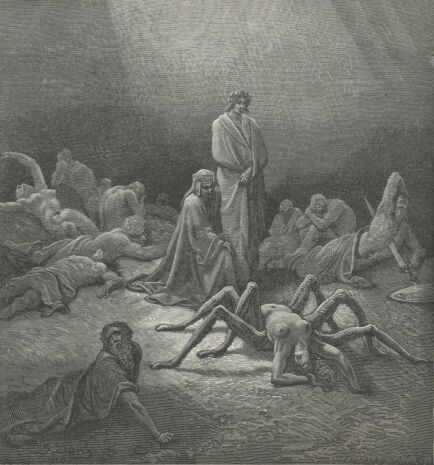
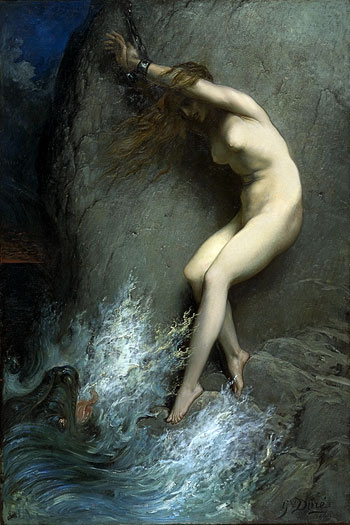
In case you've never seen a Gustave Doré illustration before, here are a couple examples of the coolness:

Arachne

Andromeda
From Edgar Allen Poe's "The Raven"

Saturday, October 2, 2010

Berlin: a book, a review, and some pictures.

Berlin (Photopocket City)Berlin by Stefan Dauth

My rating: 4 of 5 stars


This book is a wonderful collection of black and white photographs of my favorite city. I felt that this book captured the multitude of personalities, tones, histories, and cultures that make Berlin the fascinating city that it is and has been for at least the last century. Major city landmarks like Berliner Dom, Brandenburger Tor, the Reichstag, and such are all here, but there are also the great pictures of the alley way at Hackesche Hoefe (where you'll always find great graffiti art) and the street book market in from of the Humboldt Universitaet. You also get a good look at some of the people and fashion that populates the city. I like that the while you have the glamorous shots from down at Potsdamer Platz, you also have the less glamorous shots of anarchy symbols painted on walls and peeling, shredded poster ads pasted on the walls advertising concerts, protests and whatever else. A good collection that uses nice camera work to give an interesting portrait of a very vibrant, historical, and modern city.

View all my reviews

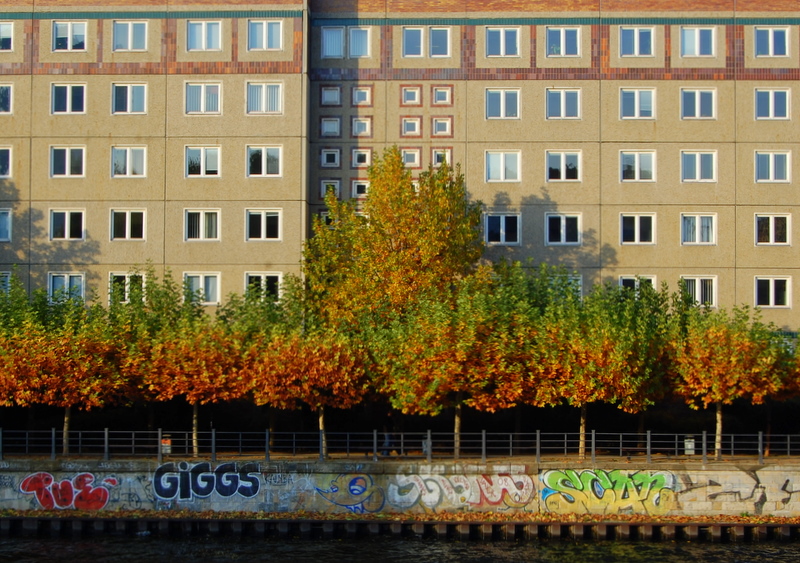
Looking at Dauth's photographs got me all nostalgic for Berlin and I felt like adding some of my own pictures that I took last fall when I was there doing a research project.

Renovations in the Alley at Hackesche Hoefe

Observing the Dead

Modern Times

Fall in the City

Sunday, August 29, 2010

Summer Reading 2010

Now that summer has passed and those of us (un)fortunate to be taking classes begin another semester, I thought I'd spotlight a few of my summer reads. It'll be like watching the Emmy's, but a lot less interesting.

I like to think that summer reading is a time to catch up on all those fine things we couldn't read while taking those stuffy university courses where only the serious stuff got read. With summer, we can (perhaps only temporarily) set aside the serious reading, let our hair down, put our feet up and lounge in the bathrobe, enjoying a light read. Leisure reading isn't supposed to be hard, after all. If the point was to think, we'd stay in classes. No, summer is a time for "something I can ignore." But sometimes this weird thing happens where I just can't let the serious stuff go. Basically, I'm often still too uptight and humorless to indulge exclusively in the light and fluffy stuff. And then there are times when words are too hard and I just want pictures - for that there are photography books to look at and admire, though I know nothing about photography. I guess summer allows for anything. Whatever your taste, summer is a time of personal indulgence - at least, it is for me, since I still live at home and avoid any real responsibilities.

Because I'm a geek, I have a list of everything I read this summer, to give a little context to the selections below. There were several nice reads, but only five will receive special recognition here. The winners are:

BEST PICTURES: Ordinary Lives - Rania Matar

Rania Matar's photos of contemporary Lebanon and the people who live there are some of the coolest shots of modern Islamic culture that I've yet seen. These portraits of Muslim women (and some men) living their lives in the bombed out, war-torn cities of Lebanon are hardly the images you find on Fox News - most of Fox's viewers don't know where Lebanon is anyway. Ordinary Lives shows something that, when you think about it, should be quite obvious: the ordinary citizens of Middle Eastern countries like Lebanon are living their lives, in the same general manner that anyone does; you work, have a family, have fun together, go shopping, go to church, listen to iPods, and anything else that the average person might do. But these ordinary lives are living amidst piles of rubble and destroyed, yet still occupied, buildings. Her photos always seem display more than one possible story, which is a helpful reminder to those of us (meaning all of us) who are prone to forget that life and people are complicated. They contain more than one story and deserve to be seen and treated as human beings rather than as just faces in the crowd, or worse, collateral damage.

BEST MUSICAL ACCOMPANIMENT: The Wilco Book - Wilco & Dan Nadal

What's better than a book with soundtrack included? The Wilco Book is an example to all books about artists and bands in how to really please your audience (or just to get them to buy your book): Include a disc of otherwise unavailable material. This doesn't seem like such a bad move since some musicians (i.e. Elvis Costello) have made claims that there's nothing more useless than writing about music. If the music is the center, then stop talking and just listen. While I appreciate the passion behind such statements, I think there's a place for writings about music. However, I still feel that the disc of outtakes and experimental recordings from the A Ghost is Born sessions really is the best part of The Wilco Book. The pictures, interviews, and essays are also interesting and worthwhile to any Wilco fan. But if turning the pages does seem like too much effort, then just hit 'play' on your cd player and enjoy the reason you wanted to read this book in the first place.

KYLIE AWARD: Then There Were None - Martha H. Noyes

Kylie was responsible for four of this summer's reads, either because she lent me her copy (Goth Girl Rising and The Zombie Survival Guide: Complete Protection from the Living Dead), chose it for our monthly reading selection (Howl's Moving Castle), or gave it to me (Then There Were None). All four are very fine reads, but Martha Noyes' short book about the disappearance of native Hawaiians due to American colonialism was the most affecting. It blends photography, historical information, quotes, and poems to give a short, concise, and substantial account of this under-addressed event. The book is more interested in illuminating and expressing the emotions that surround the event, than in presenting a dry historical account that points fingers and demands justice. Its intention is not to stir up anger or controversy, but more to give voice and feeling to a people and culture that have been diminished, overlooked and forgotten, left now to serve only as a tourist attraction. Despite its size, Then There Were None, packs one hefty punch. It contains enough information that I felt completely satisfied, while hoping that someday I could learn even more about Hawaii.

REAGAN AWARD: Don't be Afraid, Gringo - A Honduran Woman Speaks from the Heart: The Story of Elvia Alvarado - Medea Benjamin & Elvia Alvarado

Elvia Alvarado loves Ronald Reagan. Really. She's a big fan of the man who supported a corrupt government that repeatedly oppressed the peasant population of Honduras by taking away their land, denying them jobs and food, and imprisoning, torturing, and killing numerous lower class citizens who spoke out against this foul abuse of power. Alvarado is an impoverished Honduran woman who, through grassroots education and social activism, became a principle player in the lower class movement to reclaim stolen land and begin empowering women and working class citizens with the tools and know-how to survive in a country where all the wealth went to the upper class landowners. Don't be Afraid, Gringo is her story, in her words. The language is clunky and I guess what you would expect from someone who didn't make it past the fifth grade (there was no money to go on further). But the language also has a simple eloquence and straight-forward honesty that transforms these clunky thoughts into brilliant insights on the struggle for survival, recognition, and dignity. Alvarado is a voice from the working class Honduran - a voice that most Americans, including Ronald Reagan, have never heard. As a result of Alvarado protesting and peacefully fighting for the impoverished masses, she has been branded a Communist, arrested multiple times, and even tortured by her police captors. But still she has survived and continues to work towards establishing her vision of democracy. Some of the book's best moments are Alvarado's  thoughts on what a real democracy is and how she doesn't think Reagan is interested in establishing real democracy in Latin America. Ronald Reagan not interested in spreading democracy? Isn't he supposed to be the All-American President and poster-boy of all things Democracy? Not for Elvia Alvarado, and her observations are great and her use of real life experiences to show the injustice of the American-backed Honduran government are some of the best I've read. The book was first released in 1987, while Reagan was still President, but looking at conditions in Honduras (and all through Latin America) today show that there is still a lot of work to do to improve the conditions of the working class citizens. America's destructive involvement in Latin America is a shameful example of contemporary colonialism, and while I'm sure America has done some good down there, accounts like Elvia's show that, most of the time, America's self-interested intervention into Latin American affairs has hurt most the people who deserve it least.

BEST BOOK NOT ABOUT COLONIALISM: Howl's Moving Castle - Diana Wynne Jones

For whimsical young adult fantasy, Howl's Moving Castle is one of the most charming stories. It often doesn't feel like there's much of a story at all, rather it just ambles along, often sitting back and taking its time, simply enjoying watching Sophie interact with these humorous characters. I liked just watching her interact with Calcifer, Michael, and Howl so much that I didn't really care if the story ever went anywhere. Almost like Sophie herself, I kept forgetting that she actually wasn't supposed to be an ornery, yet endearing old woman, and that there really was an obstacle for her to overcome. Jones' style is light and fun, but never void of substance. She has a point to this novel, but she has a rather round-a-bout, light-hearted way of expressing herself. My only issue is one of taste: she uses too many adverbs, especially in the first half of the book. By the latter half, she reigns in the adverbs pretty well. This is a small complaint, and one that I'm very willing to overlook so as to spend more time thinking about all the great things about this book. I know this is a popular book, and I'm aware that I'm a late-comer to Diana Wynne Jones' work - so how good this book is might only be news to me. But it's a fast read, and a fun read; so, if you have the time, I'd recommend revisiting this lovely world.   

Friday, August 27, 2010

Then There Were None

  Then There Were NoneThen There Were None by Martha H. Noyes

My rating: 5 of 5 stars


Then There Were None is a perfectly structured book; it knows what it wants to do, and executes it through a remarkable balance of photographs, quotes, poems, and historical information. This is a quick, concise, and substantial little book that packs one solid punch.

Elizabeth Kapu'uwailani Lindsey Buyers states in the book's forward that the book "is not a tale of blame or vicitmization." Well, it doesn't need to be. The devastation of the Hawaiian people and their culture hardly needs to be told through finger-pointing and victimization. Simply recounting the history and showing their culture is enough, as this book proves.

I also quite like the preface, which asks:

"Has any history text, however objective, quelled the troubles between [warring cultures]?

No, because history isn't what divides them. what fuels the division is emotion.

It is an emotional voice we wanted to offer. If the heart's wounds, the spirit's ache are laid bare, healing balm can reach the injury and ease the pain."

It makes a lot of sense to me. The book does elicit an emotional response, but through a controlled, leveled presentation that doesn't seem negatively manipulative or entrenched in hateful bitterness. Any anger I felt while reading this book is a product of my own rash behavior and not the wishes of the author.

The archival photos are effective both as visual documentation as well as additional narration. They aren't extraneous, but rather work in tandem with the text, using photography's strengths to enhance the narrative beyond what text can do. Since Martha H. Noyes first told this story through a documentary film of the same title, the skillful use of photos comes as no surprise.

What a lovely little book. The cover photo is excellent, the size is great, the length is just right, and the information is substantial throughout. A sad, but wonderful little book.

View all my reviews >>

Sunday, June 6, 2010

Hear That Sound

I've been listening to the new National album, High Violet, a lot this week - thinking about it a lot. I like the album. Not as much as 2007's Boxer, but much more than 2005's Alligator. High Violet has some of the same charm as Boxer - nice drums, (mostly) nice lyrics, and a general feeling of anxiety laced with hope that I guess I connect to.

But there are some notable differences, too. Matt Berninger's vocals often have more echo to them and the general sound of the album is more open, which I guess makes sense since they recorded it in Aaron Dessner's garage. These changes are fine, except that part of the charm of Boxer was how soft, close, and intimate the album felt and sounded. Boxer sounds like it was recorded in your living room; like they're playing the album right there in your room and Berninger is talking to you. With the rather personal, albeit cryptic, nature of Berninger's lyrics, I think the closer sound serves his voice and lyrics better.

And the music? Well, songs like "Terrible Love" and "Lemonworld" feature a noticeably more grungy sound. As simply a taste issue, I prefer their smoother sound - again, Boxer, excels at this. But some discussion among some friends of mine wondered whether this grungy sound was a conscious musical decision, or just a crappy recording. I'm not a skilled enough listener, nor do I have the hi-fi system to really make such a judgment (though my Sennheiser PX 100 headphones are a respectable way to listen to the recording quality of an album - at least for a layperson like myself). I tend to think the gritty sound was a conscious decision rather than an ignorant blunder. Whether or not High Violet's recording contains blarring flaws doesn't change that there's more to the album than just the quality of its recording, and, in the end, I think the pros outweigh the cons. When I listen to the disc, the thing that really frustrates me is the album's rather limp conclusion; the last two tracks, "England" and "Vanderlyle Crybaby Geeks" just aren't that interesting to me, regardless of how good or bad the recording is. There's more to a song than its recording, but the quality of the recording is still interesting to think about sometimes, and I feel like writing about that for a few paragraphs.

I like a good recording as much as anyone, but I'm willing to forgive some poor production, mixing and mastering if the songs are strong. There are a number of poorly recorded albums out there that are still really great - I'm thinking of things like The Sisters of Mercy's First and Last and Always, Redemption (Bound)'s Home (Again), Skinny Puppy's Rabies (though that was a pressing error, more than a recording flaw; the album was later remastered and reissued), Metallica's ...And Justice For All and Death Magnetic, Simple Minds's Reel to Real Cacophony; even my favorite album, The Cure's Disintegration sports some rather murky recording (lucky for us, in less than a week that will hopefully be rectified, as it has been for The Sisters and Simple Minds albums).

The issue of an album's recording has become more of a thing after indulging in a long(ish) Metallica binge. During this heavy metal indulgence, I read a less than impressive book on Metallica's songs, which drew my attention to ...And Justice For All's (poor) recording quality. I've always really liked the Justice album. It appealed to me much sooner than Ride the Lightning, Master of Puppets, and even Metallica (the Black Album). But I didn't notice the crappy recording. I knew it sounded different, but seeing how I was in jr. high at the time, an album's recording quality wasn't the thing I was most interested in when it came to listening to music. Anyway, after recently listening to the disc a couple times, I can see the problems that people have been talking about - the biggest issue being that you can hardly hear the bass, which you think I'd have picked up on since I am such a fan of the bass guitar.

Recently, while reading some reviews of the Metallica documentary, Metallica: Some Kind of Monster, I stumbled across some posts on the recording quality of Metallica's most recent album, Death Magnetic. They weren't very nice, complaining about how loud the album is - meaning how loud the album is recorded. Again, I had noticed the album sounded different and was loud, but I failed to notice that it was how loud the recording was, not just how high I had the volume. This explained why I've often found myself turning Death Magnetic down more and more while listening to it. The disc is too loud, and it's really too bad, because the songs are really good (except for the closer "My Apocalypse", which is just kinda there). I could argue that part of the reason why I missed the recording issue on Death Magnetic is that I've been listening to a 192 kbps mp3 rather than the CD or vinyl, but the truth is I just missed it.

So what does it matter that Death Magnetic is recorded too loud? Well, it's a matter of compression, as was explained in a very enjoyable article in the now canceled magazine Stylus. Writer Nick Southall explains how the new thing in recording is compression. The more you compress a disc, the louder it gets; if you compress it too much the album will be so loud that it clips (basically, the sound is shot and sounds bad). Even if you don't compress an album to the point of clipping, it still pushes all the volume levels on the album to one average level, which is unnatural and weird to listen to. Variation in sound levels is a natural thing to music and the ear likes it much better - listen to Pink Floyd's Dark Side of the Moon, to see what I mean. In the case of Death Magnetic, the whole album sounds like it's being played at maximum volume, so maximum that the instruments begin to blend together and the sounds distort, which make the album less appropriate for your headphones and more appropriate for a Gitmo torture cell. When I don't even need to drive my speakers beyond their limits to get clipping, there's a problem.

Unfortunately, Metallica isn't the only sinner when it comes to high compression recordings. It's actually becoming the norm amongst the big music industry studios. Pop in an older disc and then compare that to a more recent one and it's almost guaranteed that there will be a noticeable difference in recording volume. A little compression isn't bad, but like anything there's a threshold that shouldn't be crossed.

The problem basically boils down to laziness; studios want an immediately attention-grabbing record. And listeners don't wanna turn the volume up anymore and aren't really paying attention to what they're listening to. Music wallpapers our lives - it's everywhere, and we've kind of stopped listening to it (if we ever really did). It's now just a sensory thing - a stimulant - rather than an art form, or even an entertainment. The lazy listener isn't interested in what is really going on in what they're listening to, just that they're listening to something that appeals to the most superficial needs of the listener - a beat, a melody, even just an image rather than a sound. The lazy recording artist wants their record to appeal to as many people as possible, as quickly as possible; enter high compression and botched music.

This seems another example of how the lazy, yet mainstream, use of modern technology actually creates a poorer quality product and a poorer quality experience with that product (even if we don't consciously notice, our body can tell). It's like crappy cell phone cameras being used as the primary camera rather than the emergency camera for those out of nowhere moments you just gotta have a picture of. Or watching movies on iPods, and rubbish quality YouTube videos. Again, sometimes the quality is gonna be shot and there's nothing to be done about it; but for somethings (i.e. movies; music videos; heck, even many digital cameras for home movies shoot a decent picture - is uploading them at decent quality too much to ask?) ruddy quality is rather inexcusable, especially when we dismiss cassette tapes and VHS as obsolete and poor quality - my VHS music videos look and sound better than most of the videos I've watched on YouTube.

The digital age and the mp3 explosion have saturated the music world with poor quality mp3s - they take up less space; naturally, when you cut out all those frequencies that really fill a song out, your file sizes will be smaller, but so will one's listening pleasure (give Dead Can Dance's Within the Realm of a Dying Sun or Mike Oldfield's Light + Shade a cd vs. 192kbps mp3 comparison and it becomes really obvious how much is lost in the conversion). We absorb all these things because they're easy and convenient, not because they're better. It also doesn't help that we're often listening to our music on junky speakers/headphones - iPod and Skullcandy headphones are good for wasting resources and feeding landfills, not for listening to music; that single miniature speaker in our laptops is also hardly a listening device, but it can be temporarily useful when it's all you have available.

Perhaps this all sounds a bit pretentious, elitist, and preachy. Fair enough. Sometimes we should be a little elitist about things. I happen to feel like talking about music recordings this time. It's what has my interest at the moment. As one with some technology issues and a perhaps unhealthy love of music, I've just been thinking that we could stand to pay attention to what we're listening to a little more, and paying attention to how the music is recorded as well as the music itself. It's good to sometimes sit down and just listen to an album and really focus on the album - like we would (hopefully) focus on a movie we're watching or a book we're reading.

Photo by Mothslayer

Sunday, November 29, 2009

Song of the Week: 'Worlock' - Skinny Puppy & Rabies Review

As a partial follow up to my earlier post on Skinny Puppy's concert at Salt Lake City's Club Vegas, I have chosen to spotlight their track 'Worlock' from their 1989 release Rabies as this week's Song of the Week. It might seem a cop out since 'Worlock' is overwhelmingly accepted as one of Skinny Puppy's finest moments, leaving little to still be said about why the track matters. All the same, I'm gonna go on about it for a few lines.

'Worlock' still remains my favorite Skinny Puppy song. I've listened to it and loved it since I was nine or ten years old, though at that age I had little idea what the song was about and why it was good. I liked it because my brother liked it and it sounded weird, but intriguing somehow. It still intrigues me and still blows my mind when I listen to it. 'Worlock' shows Skinny Puppy at their best, proving their incredible talent for creating solid pop beats, put to haunting, sad and pained music that is both abrasive and, at times, rather beautiful (just listen to that chorus and the rising finish). Ogre's ragged, raspy, cutting vocals transition for the chorus to a heavily computer-altered delivery that becomes almost overwhelmingly heartbreaking. During that final vocal delivery his voice soars to a flayed agony that suggests tragedy as much as it does horror. The lyrics are tough to follow and understand (this is Skinny Puppy after all), so here they are, so you can read along. In many ways the song is as significant today as it was upon its release - audio sample: "the police used to watch over the people, now they're watching the people", as just one example.

The 'Worlock' video has a long controversial history. It's a compilation of film clips from gore horror films linked together in a long montage. It covers over 20 films and is just one grotesque image after another. The video received an X rating for being pornographic. It is. But the images, combined with shots of slaughterhouse blades and uncooked hamburger suggest that what these images are saying is that the violence we do to each other has created a human slaughterhouse that we all should be disgusted by. We're killing ourselves, committing global suicide. Not a happy message, but one that the modern horror film often adopts and that many in the world at large seem to agree, giving rise to the opinion that it is really within the last century that the world went to hell. In the last century human destruction has accelerated at an alarming rate, with the nightly news is in danger of becoming more and more like the 'Worlock' video, or that we as viewers only see one gratuitous, pornographic image of violence and atrocity after another. Skinny Puppy might just be showing us a rather accurate portrait of the world, or at least how some people are beginning to see the world, and that should deeply trouble us and, like The Cure's blistering track 'Pornography', move us to demand, despite the overwhelming opposition, that we "find a cure".

Yet the problem still stands: even if Skinny Puppy wishes and pushes for change, they are still clearly enamored with their own brutality, creating a paradox that is as messy as their music, or at least as messy as the Rabies album, which has received mixed reviews since it was first released. But people are complicated and the art we make can be equally so. Perceived flaws in behavior don't always count as grounds for condemnation and dismissal, in my mind, both for art and people alike. People, and the art they make, misbehave - we are human after all. Sometimes it's those very flaws, fractures, and incongruencies that make the art or the person so interesting and wonderful.

Rabies is a case in point. This album is very close to my heart - admittedly for nostalgic, childhood reasons, as well as more stuffy critically analytical ones. I'm no music critic and speak here as an enthusiastic, obsessive layperson. Rabies was for a long time my favorite Skinny Puppy album (though Last Rights has since claimed that honor). It was the album that introduced me to the band; it's also one of their most accessible records, which turns some fans off (it always seems that 'accessible' is a big buzz-kill for hardcore fans, because it suggests the band has sold out to aspirations of top 40 radio fodder stardom). But it's also inaccessible because the record is uneven. 'Fascist Jock Itch', placed between 'Two Time Grime' and 'Worlock' seems a bad move. Maybe it is. But the track's spewed speed metal is so frantic and out of control that it actually helps us notice 'Worlock' better, because we're so out of breath and in need of a relaxant that 'Worlock''s soft synth fade-in sounds like the most blessed opener we've ever heard. It might be a stretch to say the uneven shift from the one track to the other is intentionally done to draw our attention to the tone of both tracks, and this tonal juxtaposition improves both songs. But it's an idea worth thinking about.

The album takes another strange shift from 'Rivers' to the end of the record. Here Ogre takes more of a back seat as cEvin Key and D.R. Goettel take over, working their instrumental and sampling magic. 'Rivers' is a strange compilation of audio samples and gentle synths. This atmospheric tone continues with 'Choralone': a bleak, strange track that isn't much of a song at all. It's more just stream of conscious thoughts supported by very effective textures and atmospherics. 'Amputate' follows nicely and seems to round out a trio of songs that don't work as well individually as they do together. But we're ground out of this bizarrely comfortable space that 'Rivers', 'Choralone', and 'Amputate' take us to with the sixteen minute concluding live brap 'Spahn Dirge'. Like 'Fascist Jock Itch', this mammoth ender undermines our position and leaves us feeling rather puzzled and unsure if we'd just heard the most vacuous, bloated waste of music Skinny Puppy ever made. I think they know it's a tough tonal shift and did it anyway to try something bizarre and difficult to test the limits and barriers of music and albums. I don't think it was to please listeners.
Maybe the album fails in what it's trying to do, but the attempt is the attraction for me. Some criticize Skinny Puppy for bringing in Alain Jourgensen to help produce. Some are just upset that Rabies wasn't VIVIsectVI, an attitude that I'm so bored with - they already did the VIVIsectVI album, why would you want them to just rehash it? When you try repeating what you've already done all you get is the likes of Godsmack, where every album sounds like the last; or Moby's 18, which sounds like a pile of forgettable outtakes from Play. If Skinny Puppy has proven anything it is that they are not afraid to push in a different direction and do something new for the sake of trying something yet unexplored - fans and critics be damned.

The album is an intriguing look at a band continuing to experiment and see what they can find and learn. At times they really capture something fantastic: 'Rodent', 'Two Time Grime', 'Worlock', 'Tin Omen'; sometimes they make something hypnotic and otherworldly: 'Rivers', 'Choralone', 'Amputate'. Sometimes it's just kind of perplexing: 'Fascist Jock Itch', 'Rain', 'Spahn Dirge'. But all of it combined makes for a real emotional, conceptual roller-coaster that leaves me still trying to grasp why it is so appealing. In the end, I think it's that the album isn't easy to explain or compartmentalize that makes it such a stand-out and important album.

To conclude, I have this video of 'Worlock' from the Salk Lake show. The quality is as we've come to expect from such raw video recordings. Such low-quality videos are often rather boring for me, but since I was there and saw this performance, it helps preserve that night in my memory. So I'm grateful to the person who shot this video for capturing one of the best moments from that night's show.